3-Night Scottish Highlands Lodge Break: Prices, Options and Tips
A short stay in the Scottish Highlands can deliver a surprising amount of scenery, comfort, and breathing space in just three nights. For many travellers, a lodge break sits neatly between the freedom of self-catering and the warmth of a rural hotel. It matters because time, budget, and distance all affect whether a quick escape feels restorative or stressful. Understanding how prices, locations, and lodge features compare makes it far easier to book a trip that matches your pace instead of someone else’s idealised brochure.
Outline: this article begins with how pricing typically works, then compares the main lodge styles and Highland areas, then looks at what you can realistically do over three nights, then explains hidden costs and value checks, and finally closes with practical booking advice and a conclusion aimed at travellers deciding whether this short format is right for them.
1. What a 3-Night Highlands Lodge Break Usually Costs
The price of a 3-night Scottish Highlands lodge break can look simple on a booking page, but the headline rate rarely tells the full story. In broad terms, a budget stay for two in a modest self-catering cabin may start at roughly £300 to £550 for three nights in quieter months. A more comfortable mid-range lodge, especially one with better views, newer interiors, or a stronger location near popular routes, often lands around £600 to £1,000. Premium options, such as larger detached lodges, hot tub cabins, lochside properties, or luxury resort units, can easily run from £1,100 to £2,000 or more for the same three-night window. These are typical market ranges rather than fixed rules, and they shift sharply around school holidays, summer weekends, Christmas, and New Year.
Season is one of the biggest variables. Late autumn and parts of winter can offer better rates, but shorter daylight hours and occasional weather disruption may shape what you can do. Spring and early summer often strike a useful balance: roads are easier to manage than in deep winter, daylight is generous, and landscapes look especially vivid. Peak summer brings long evenings and strong demand, which pushes rates upward, particularly in well-known areas such as Loch Ness, Glencoe, and the Cairngorms.
Several factors tend to drive price beyond the base accommodation itself:
• Occupancy, with family-sized or group lodges costing more even if only two people stay.
• Features such as private hot tubs, wood-burning stoves, saunas, and enclosed decks.
• Proximity to iconic scenery, trails, or towns with restaurants and shops.
• Booking pattern, since Friday-to-Monday stays often cost more per night than midweek combinations.
One useful comparison is price per usable experience rather than price per night. A cheaper remote lodge may look attractive, but if it adds long driving times, limited dining, and expensive fuel stops, the savings can fade. By contrast, a slightly pricier lodge near Fort William, Aviemore, or Inverness may reduce travel friction and give you more of the short break to actually enjoy. For a stay of only three nights, that trade-off matters. In the Highlands, value often comes less from the lowest rate and more from how well the location supports the kind of break you want.
2. Lodge Types and Locations: Which Option Fits Your Style
Not every Highland lodge holiday feels the same, even when the photos all promise pine walls, open views, and a steaming mug by the window. The main difference lies in what kind of stay you want: private and self-directed, lightly serviced, or fully cushioned by on-site facilities. Self-catering lodges are the most flexible. They usually suit couples, families, and small groups who want their own kitchen, more space, and the ability to structure days freely. A resort-style lodge, often part of a holiday park or managed estate, may include reception support, a restaurant, leisure facilities, or children’s play areas. Hotel-linked lodges sit somewhere in the middle, giving you cabin-style privacy with optional meals or spa access.
The right area matters just as much as the lodge itself. Aviemore and the Cairngorms are a strong choice for first-time visitors who want easy access to walking, cycling, wildlife experiences, and winter sports infrastructure. Loch Ness and the wider Inverness-shire area work well for travellers seeking a mix of sightseeing, day trips, and easier road connections. Glencoe and Fort William appeal to people drawn to dramatic mountain scenery and outdoor adventure, though weather and traffic can shape the pace. Wester Ross, Assynt, and other more remote northern or western areas offer unforgettable landscapes, but they ask for more driving discipline and a slower mindset.
Here is a simple way to compare common options:
• Self-catering woodland lodge: best for privacy, cooking your own meals, and quieter evenings.
• Resort lodge: best for families or travellers who want convenience and activities on site.
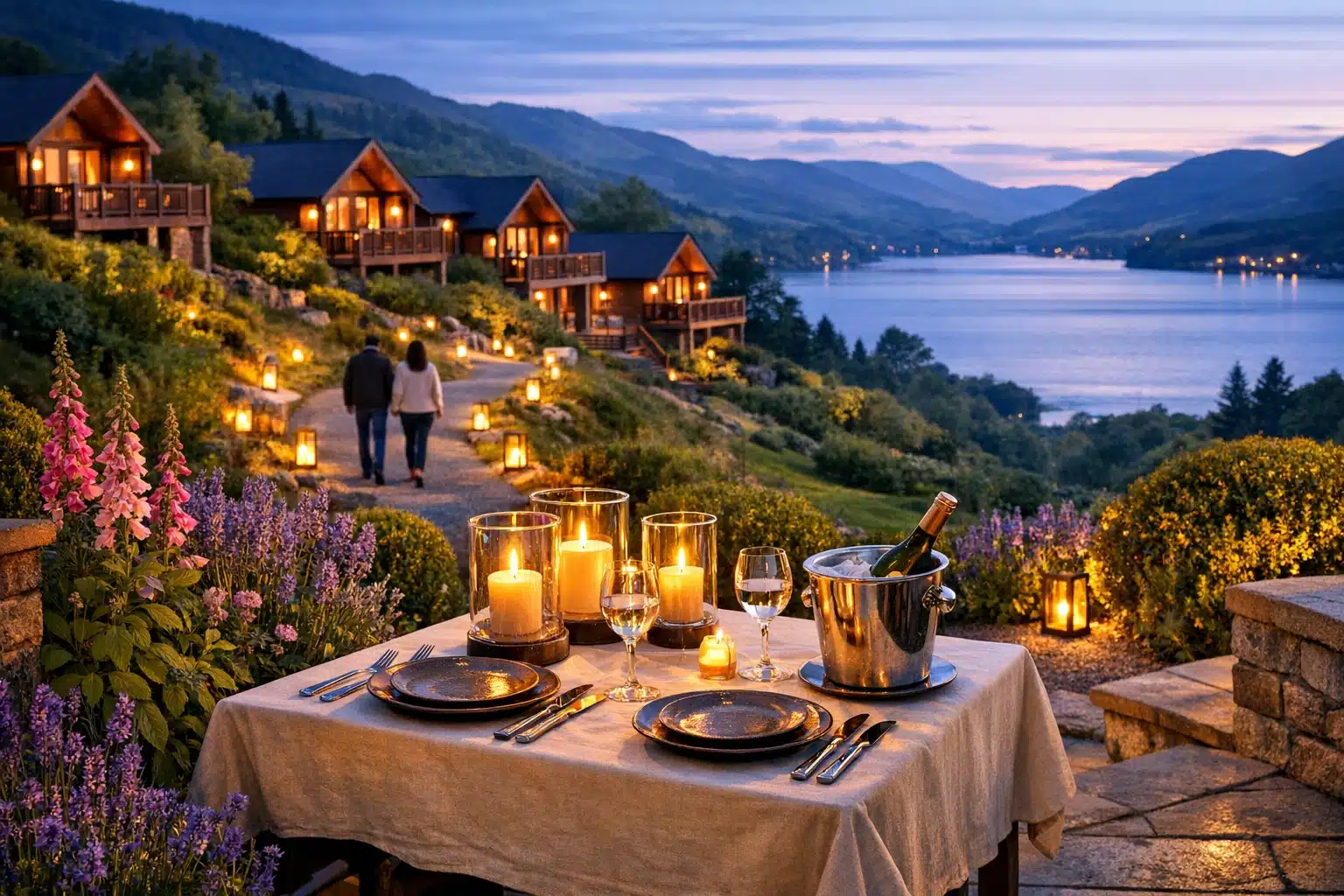
• Luxury lodge with hot tub: best for a romantic break or a special occasion, but usually at a clear premium.
• Pet-friendly cabin: ideal for dog owners, though pet fees and cleaning rules vary.
There is also a practical question of atmosphere. Some lodges are contemporary and polished, with floor-to-ceiling glass and minimalist interiors. Others lean into the familiar Highland mood of tartan details, timber finishes, and a little rustic charm. Neither is automatically better. If your ideal trip includes sunrise over a loch, muddy boots at the door, and a quiet evening with the rain drumming lightly on the roof, a simpler cabin may feel exactly right. If you want a polished base with fast Wi-Fi, a large bath, and room service nearby, pay attention to the details behind the photographs. The best booking decisions come from matching the property to your real habits, not to an imagined version of yourself on holiday.
3. What You Can Realistically Do in Three Nights
A 3-night Highlands break works best when you treat it as a focused escape rather than a rushed attempt to “see Scotland.” That difference is crucial. The Highlands are spacious, roads can be slow, and weather has a habit of rewriting neat plans. A short stay can still feel rich and memorable, but only if the itinerary leaves room to breathe. Think in terms of one main area, one or two signature outings, and enough unplanned time to enjoy the lodge itself. After all, part of the appeal is not just what lies beyond the door, but the pause inside it.
A typical pattern is simple: arrive on day one, explore locally on day two, take one slightly bigger outing on day three, and leave on day four. That approach sounds modest, yet it often works better than cramming in long-distance driving. If you stay near Aviemore, for example, you might spend one day around Loch Morlich, forest trails, or a mountain railway area, then use the next for a scenic drive, a distillery visit, or a wildlife excursion. Near Fort William, a short break could include Glencoe viewpoints, a gondola or hill walk depending on weather, and relaxed dining back in town. Around Loch Ness, you can combine castle ruins, waterside stops, and an easy run into Inverness without exhausting the whole trip in the car.
Different travellers will shape the same three nights in different ways:
• Couples often prioritise scenery, quiet dinners, a hot tub, and shorter walks with strong views.
• Families may prefer activity-led locations with cycling, wildlife parks, easy lochside stops, and space for children to unwind.
• Walkers and photographers usually gain more by choosing one landscape-rich base than by changing plans constantly.
• Dog owners should check trail access, enclosed outdoor space, and nearby places that welcome pets indoors.
There is also a seasonal reality to factor in. In summer, long daylight allows for flexible evenings and scenic drives after dinner. In winter, daylight is much shorter, so a late arrival can remove much of the first day. That makes proximity even more important. A three-night break can absolutely feel worthwhile, but the winners are usually the travellers who accept its scale. The Highlands reward depth over speed. A single glen under shifting cloud, a still loch at breakfast, or a quiet road edged with heather can leave a stronger impression than ticking off five distant landmarks in one tiring sweep.
4. Hidden Costs, Booking Terms, and How to Judge Real Value
One of the most common mistakes with short lodge breaks is assuming the advertised accommodation rate represents the full trip cost. In reality, several smaller charges can materially change the value of a 3-night stay. Cleaning fees, pet supplements, hot tub surcharges, wood or fire starter packs, early check-in options, and refundable damage deposits are all worth checking before you commit. In more remote properties, energy usage can also matter, especially in colder months if the booking terms are unusual. Most reputable listings are transparent, but travellers still benefit from reading the pricing breakdown all the way to the final payment page.
Food is another easy area to underestimate. Self-catering often sounds cheaper than eating out, but if you are arriving late, buying convenience items in a small local shop, and dining out once or twice anyway, the difference may be narrower than expected. On the other hand, a lodge with a well-equipped kitchen can genuinely reduce spend for families or longer evenings indoors. Fuel should also be part of the comparison. A remote bargain lodge may involve repeated drives to the nearest village, attraction, or restaurant, and that adds both cost and time. In some rural areas, fuel prices can be noticeably higher than in larger towns.
When comparing listings, it helps to ask a few direct questions:
• Is the quoted price for the full stay, including taxes and mandatory fees?
• Are towels, linens, Wi-Fi, and parking included?
• Is the hot tub private, shared, or charged separately?
• What is the cancellation policy, and how close to arrival can you amend dates?
• How long is the check-in window, especially if you are driving from central Scotland?
Booking directly with an established lodge operator can sometimes offer better flexibility or small extras, while major booking platforms may make price comparison easier. Neither route is automatically superior. What matters is clarity. Look at recent reviews for signs of recurring issues such as poor heating, misleading distances, weak cleanliness standards, or overstated views. Also pay attention to phrases like “near Loch Ness” or “close to Glencoe,” which can cover a surprisingly large area in Highland terms. Real value comes from alignment: the property, the location, the facilities, and the total cost should all support the same kind of trip. If even one of those is off, a seemingly attractive deal can feel much less satisfying once you arrive.
5. Final Tips and Conclusion: Who This Break Suits Best
If you are planning a 3-night Highlands lodge break, the smartest strategy is to make a few deliberate choices early. Start with the kind of mood you want. Do you want active days and simple evenings, a romantic retreat with minimal driving, or a family base with enough flexibility to handle changing weather? Once that is clear, choose the area before choosing the lodge. Too many travellers fall for a lovely property photo and only later realise it is far from the walks, restaurants, or viewpoints they had in mind.
Transport deserves honest thought. A car is usually the most practical option, especially for lodge stays outside towns, but driving times in the Highlands can be deceptive. Single-track roads, weather changes, livestock, and photo stops all slow things down. If you are relying on rail and taxis, stay closer to hubs such as Aviemore, Inverness, or Fort William. Pack for variable conditions in every season. Waterproofs, warm layers, and good shoes are rarely wasted here. Even in summer, mornings can feel brisk and the sky can turn quickly from blue to silver.
A few final tips can improve the whole experience:
• Book dinner reservations in advance if your lodge is in a popular rural area.
• Arrive with breakfast basics and simple evening food, especially if shops close early.
• Do not overschedule your days; one memorable walk and one good meal can be enough.
• Check mobile signal and Wi-Fi notes if you plan to work remotely or stream media.
• If views matter to you, study maps as well as photos.
For the right traveller, this kind of break is excellent value. It suits couples wanting a compact escape, busy professionals who cannot take a full week off, families looking for a manageable school-holiday trip, and repeat visitors who prefer one region at a time. It is less ideal for people who want to cover the Isle of Skye, the North Coast, Glencoe, and Cairngorms in one sweep, because three nights simply do not reward that pace. The best short Highland stays are measured, not frantic. You arrive, settle in, watch the light shift across water or hillside, and let the place do what it has always done well: slow the mind, sharpen the senses, and make a few days feel usefully longer than they are. For travellers who want beauty without overcomplication, a well-chosen lodge break remains one of the most appealing short trips in Scotland.